
Polymerase Chain Reaction (PCR) remains one of the most indispensable tools in molecular biology, enabling the amplification of specific DNA or RNA sequences for downstream applications such as cloning, sequencing, mutation detection, and gene expression profiling. Despite its wide adoption, PCR experiments frequently encounter problems ranging from no amplification to weak signals and high run-to-run variability.
To mitigate these issues, researchers increasingly rely on quantitative positive controls (QPCs). Unlike simple positive controls, QPCs provide a defined template concentration and an expected amplification curve. By monitoring QPC performance, researchers can distinguish between failures caused by template quality, reaction chemistry, and instrument calibration, and can standardize results across multiple runs.
This article presents an extended troubleshooting framework for PCR using quantitative positive controls, highlighting practical decision-making strategies, calibration tips, and reference materials from trusted research institutions and government agencies.
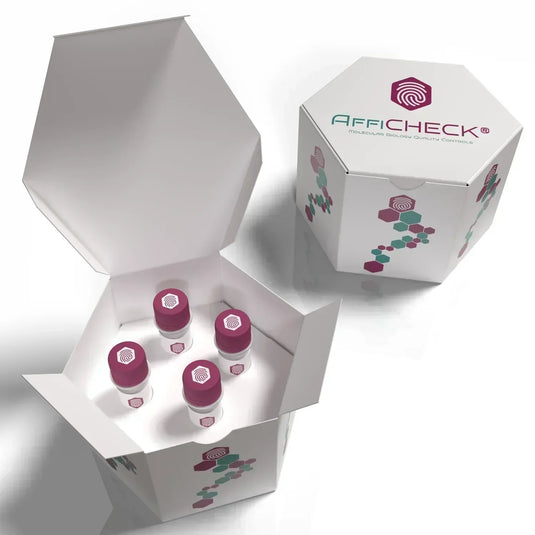
The Role of Quantitative Positive Controls in PCR
Positive controls in PCR serve as internal benchmarks. When the control is present at a known concentration, it allows direct comparison of amplification efficiency.
-
Qualitative controls only confirm that amplification occurred.
-
Quantitative controls confirm amplification and provide numeric reference points for evaluating performance.
This distinction is crucial because amplification efficiency can decline due to subtle issues such as enzyme degradation or minor thermal miscalibrations. Without a quantitative benchmark, researchers may misinterpret these changes as biological variability.
For more background on PCR standards, see NIST standards and calibration protocols and NIH molecular protocols.
Typical PCR Problems
No Amplification
A complete failure to amplify indicates systemic issues. If both sample and positive control fail:
-
Thermocycler misprogramming (NIST Bioscience Calibration)
-
Reagent degradation (FDA Reagent Quality)
-
Primer design mismatch (MIT Biology Resources)
If positive control amplifies but the sample fails:
-
Poor nucleic acid extraction (USDA ARS Genomics Resources)
-
Inhibitors in the sample matrix (EPA Environmental Testing)
-
Fragmented or degraded sample (Stanford Genetics)
Weak Amplification
A weak control and sample suggest:
-
Suboptimal MgCl₂ or buffer formulation (UCSF Biochemistry)
-
Polymerase enzyme fatigue or contamination (NIH Research Services)
-
Low primer annealing efficiency (Harvard MCB)
If only the sample is weak while the control is strong:
-
Low template copy number (Cornell Biotechnology)
-
Sample partially degraded (UC Berkeley MCB)
High Variability
PCR requires consistency across replicates. Variability can be introduced by:
-
Thermocycler thermal uniformity problems (NIST Thermometry)
-
Pipetting errors (NIH Lab Training)
-
Uneven reagent mixing (FDA Laboratory Methods)
When QPCs show high replicate variability, this strongly suggests a systemic issue that must be addressed before sample data can be trusted.
Expanded Troubleshooting with Decision-Tree Logic
Decision trees provide structured troubleshooting. Below is a more detailed workflow:
-
Positive Control Amplifies as Expected
-
✅ Instrument, primers, and reagents are working.
-
❌ If the sample fails → check template quality (extraction, inhibitors, degradation).
-
-
Positive Control Amplifies with Weak or Delayed Curve
-
⚠ Suggests reagent degradation (enzymes, dNTPs, primers).
-
⚠ Possible thermocycler calibration drift (NIST Instrument Calibration)
-
Next step: re-run with new reagents, check calibration files.
-
-
Positive Control Fails Completely
-
Indicates a global failure in setup.
-
Cannot interpret sample results until problem is fixed.
-
Check thermal block accuracy (USGS Instrumentation Guide) and reagent storage conditions (USDA Research Guidelines).
-
Best Practices for Using QPCs
-
Concentration Titration: Include QPCs at multiple dilutions (e.g., 10⁵, 10³, 10¹ copies) for sensitivity benchmarking (CDC PCR Training Resources).
-
Replicate Analysis: Always run QPCs in triplicate to measure precision (NIH Research Methods).
-
Instrument Calibration: Verify thermocycler block uniformity quarterly (NIST Biosciences Calibration).
-
Reagent Tracking: Record lot numbers and expiration dates (FDA Research Standards).
-
Data Archiving: Maintain amplification data in standardized formats for reproducibility (NCBI GenBank Standards).
Case Study Examples
Example 1: No Amplification Despite Strong QPC
Researchers at UC Berkeley reported PCR failures in environmental DNA samples. QPCs amplified as expected, confirming instrument performance. Further analysis revealed humic acid inhibitors, commonly found in soil extracts. Enzymatic cleanup restored amplification.
Example 2: Weak QPC Signal
At Cornell Biotechnology, weak QPC signals were traced to expired dNTPs stored improperly at −20°C. Replacing reagents restored performance.
Example 3: High Variability Across Runs
A NIST collaborative project identified that thermal gradients across aging thermocyclers were producing inconsistent QPC curves. Recalibration corrected the problem.
Advanced Troubleshooting Tips
-
Enzyme testing: Compare multiple polymerases under identical conditions to identify reagent-specific issues (NIH Molecular Cloning Resources).
-
Inhibitor removal: Use column purification or enzymatic digestion to eliminate contaminants (EPA Molecular Tools).
-
Template quantification: Always measure nucleic acid concentration before PCR using fluorometric methods (USGS Laboratory Methods).
-
Cycling optimization: Adjust annealing temperatures incrementally (±2°C) to refine primer binding (MIT Biology Course Materials).
Long-Term Strategy: Building Reliability
Integrating QPCs into every PCR run transforms troubleshooting from a reactive process into a preventive strategy. By archiving amplification performance over months, labs can detect early signs of thermocycler drift, reagent batch inconsistencies, or cumulative pipetting variability.
Institutions such as NIH, FDA, CDC, NIST, and USDA recommend internal benchmarking with validated controls for maintaining data reproducibility in molecular workflows.
Conclusion
Troubleshooting PCR without quantitative positive controls leaves researchers vulnerable to false negatives, ambiguous outcomes, and wasted resources. By incorporating QPCs into experimental workflows, scientists gain a structured diagnostic tool for identifying whether issues arise from template quality, reaction chemistry, or instrument calibration.
This approach improves reproducibility, strengthens experimental reliability, and aligns laboratory practices with recognized standards from leading research and regulatory agencies.


