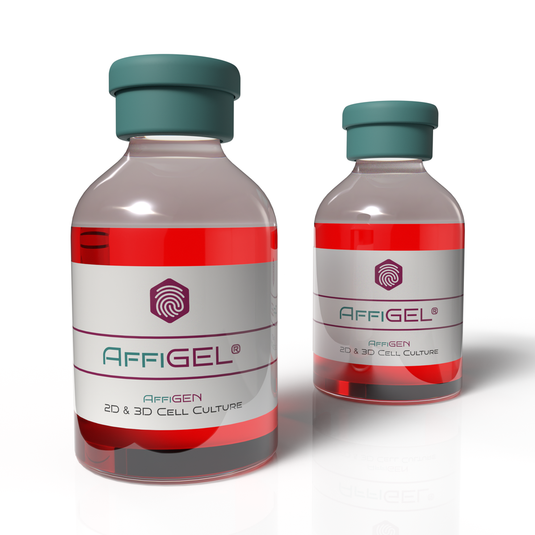
The transition from traditional extracellular matrix (ECM) formulations to LDEV-free matrices is becoming standard in laboratories concerned with reproducibility, regulatory compliance, and safety. LDEV (lactate dehydrogenase-elevating virus) is a murine pathogen often associated with basement membrane extracts derived from murine Engelbreth-Holm-Swarm (EHS) sarcoma. Contamination with LDEV poses challenges in immunology, virology, regenerative medicine, and biomanufacturing research.
Matrix LDEV-Free variants are manufactured using additional purification and quality control processes that eliminate LDEV while maintaining essential ECM proteins such as laminin, collagen IV, entactin, and heparan sulfate proteoglycans. For laboratories that already rely on ECM-based systems, a stepwise and carefully documented transition is essential.
This article provides detailed practical guidelines for researchers making the switch, with step-by-step instructions, technical considerations, and troubleshooting strategies, along with direct references to validated resources from academic (.edu) and governmental (.gov) domains to support reproducibility.
Understanding the Rationale for Transition
The key motivations for adopting LDEV-free matrices include:
-
Safety: Preventing inadvertent introduction of viral contaminants in sensitive systems (CDC Biosafety Guidance).
-
Regulatory compliance: Aligning with institutional and federal standards such as those set by FDA CBER for biologics.
-
Reproducibility: Minimizing lot-to-lot variability, which is central to NIH Rigor and Reproducibility Initiatives.
-
Compatibility with clinical workflows: LDEV-free reagents are often required for translational pipelines in regenerative medicine, as outlined by NIH Regenerative Medicine Programs.
For detailed reviews on ECM biology, researchers can refer to Harvard Medical School Cell Biology Resources, Yale School of Medicine Cell Culture Guidance, and Stanford Biosciences Core Facilities.
Thawing Protocol for LDEV-Free Matrices
Proper thawing is critical to maintaining ECM protein integrity and gelation capacity.
Step-by-step thawing procedure:
-
Retrieve storage vial from −80 °C only when needed.
-
Thaw slowly at 2–8 °C (refrigerator) overnight. Avoid room temperature thawing.
-
Keep vial on ice during handling to prevent premature gelation.
-
Aliquot immediately into pre-chilled sterile cryovials to avoid repeat freeze–thaw.
-
Store aliquots at −20 °C for up to 6 months.
Additional thawing guidelines are available at University of Michigan Cell Culture Facility, UCLA Stem Cell Core, and NIH Cell Biology Resources.
Coating Procedures for LDEV-Free Matrix
Coating efficiency is directly linked to reproducibility in cell attachment and growth.
Recommended coating workflow:
-
Dilute ECM in cold, serum-free medium (e.g., DMEM/F12).
-
Keep all pipettes, tips, and tubes on ice during preparation.
-
Add the solution evenly across the surface of culture vessels.
-
Incubate at 37 °C for 30–60 minutes for polymerization.
-
For thin-coating applications, remove excess and rinse once with PBS.
Validated coating methods are available at Johns Hopkins Tissue Culture Core, MIT Department of Biological Engineering, and NIST Biomanufacturing Resources.
Seeding Density Optimization
Because LDEV-free matrices may present slightly altered attachment kinetics compared to traditional ECM, researchers should recalibrate seeding densities.
Recommended densities (cells/cm²):
-
Human pluripotent stem cells (hPSCs): 20,000–40,000
-
Primary epithelial cells: 15,000–25,000
-
Immortalized cell lines (e.g., HEK293, HeLa): 10,000–15,000
Parallel control plates using a standard ECM are recommended for comparison. See University of Wisconsin Stem Cell Center, NCBI Gene Expression Omnibus, and NIH Stem Cell Guidelines for validation approaches.
Storage and Stability
-
Store bulk vials at −80 °C.
-
Aliquots should be kept at −20 °C for up to 6 months.
-
Avoid repeated freeze–thaw cycles; >1 cycle may cause loss of activity.
-
Record lot numbers, concentration, and expiration date in QC logs.
Standards for biological reagent storage are outlined in EPA Laboratory Practices, USDA Research Resources, and NIH Office of Research Services.
Troubleshooting Common Problems
Poor Attachment Efficiency
-
Confirm matrix did not warm above 10 °C before coating.
-
Increase seeding density by 20–30%.
-
Supplement medium with ROCK inhibitor for sensitive pluripotent cells.
Reference: ATCC Cell Culture Guidelines, CDC Culture Methods.
Batch-to-Batch Variability
-
Always request certificate of analysis (CoA) from supplier.
-
Validate new lots against historical controls.
-
Use internal reference lines (e.g., HeLa, NIH-3T3).
More information available from NSF Research Integrity Standards, NIH Rigor Resources.
Gelation or Polymerization Issues
-
Always keep handling surfaces and reagents on ice.
-
Pre-chill culture plates before coating.
-
Cross-check lot viscosity specifications.
Protocols for troubleshooting ECM handling are detailed at Yale School of Medicine Cell Biology Techniques, Stanford Research Facilities, and NIST Biomanufacturing.
Documentation and Quality Control
Laboratories adopting LDEV-free matrices should integrate them into existing quality assurance systems.
-
Document all reagent lots, thaw dates, and coating concentrations.
-
Align practices with NIH reproducibility initiatives.
-
Follow NSF Research Documentation Standards for data integrity.
-
Cross-reference performance with publicly available datasets such as NCBI GEO.
Advanced Considerations
-
Automated platforms: LDEV-free matrices can be integrated into robotic plating systems, but validation is needed (see NIST Advanced Manufacturing Programs).
-
3D cultures and organoids: Coating density and polymerization timing must be carefully optimized; refer to NIH 3D Bioprinting Initiatives.
-
Cryopreservation: For long-term projects, validate cell recovery post-thaw when grown on LDEV-free substrates, as noted in FDA Cell Therapy Guidance.
Conclusion
Transitioning to Matrix LDEV-Free is a critical step for ensuring biosafety, reproducibility, and compatibility with regulatory standards in cell culture workflows. By following strict thawing, coating, and seeding protocols—and by systematically documenting performance—researchers can ensure smooth adoption in both routine culture and advanced applications.
The use of academic and governmental resources ensures alignment with internationally recognized best practices. Institutions like NIH, FDA, CDC, NIST, and numerous universities provide detailed protocols that should be consulted alongside supplier instructions.
Adopting LDEV-free matrices not only improves laboratory reproducibility but also supports long-term scalability in regenerative medicine, toxicology, and translational research.